
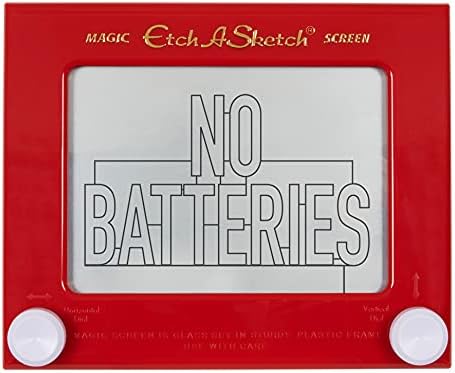
 Etch A Sketch ClassicOriginal red-framed drawing toy with twin knobs and our classic gray screen★★★★★ 4.7 · 9,454 reviews
$21.49
Since July 12, 1960
We make the magic screen with two white knobs and a single stylus that never lifts. Every sketch is a quiet journey across pale silver gray powder, started from scratch with a quick shake and finished with patience.
Etch A Sketch ClassicOriginal red-framed drawing toy with twin knobs and our classic gray screen★★★★★ 4.7 · 9,454 reviews$21.49
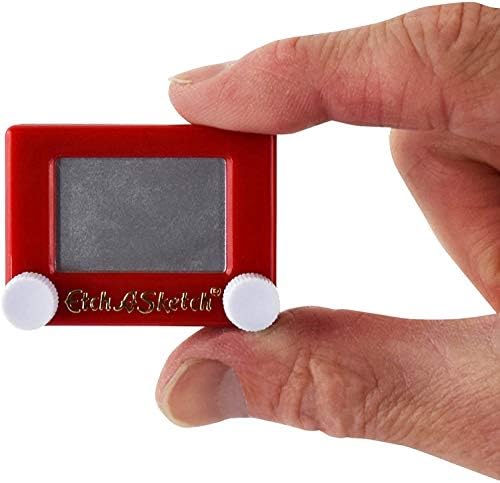 World's Smallest Etch A SketchMiniature version of our classic red drawing toy that fits in your palm★★★★★ 4.6 · 2,382 reviews
$8.99
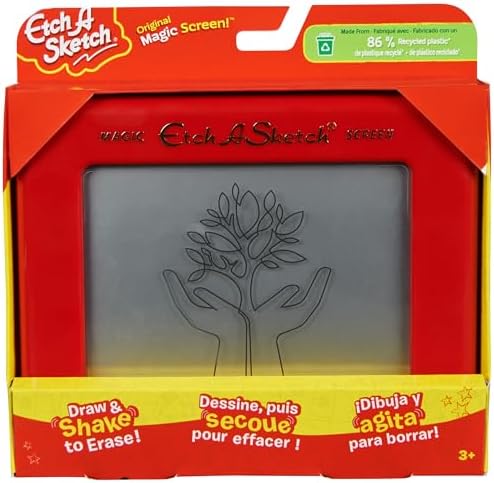 Etch A Sketch Sustainable Classic Magic Screen Drawing ToyOur full size red drawing frame made with eighty-six percent recycled plastic material★★★★★ 4.5 · 975 reviews
$21
 Etch A Sketch DoodlePocket drawing screen built for cars, waiting rooms, and quick sketches on the move★★★★☆ 4.0 · 442 reviews
$6.21
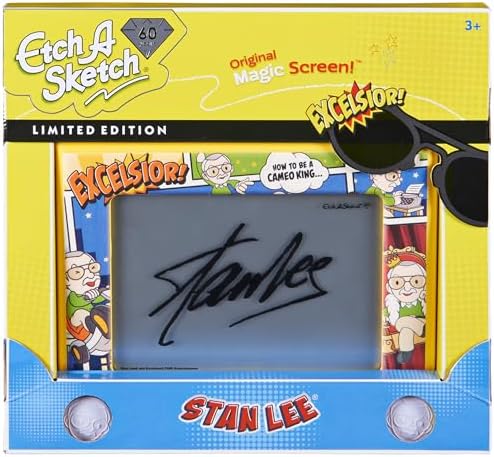 Etch A Sketch ClassicOur full size magic screen drawing toy in a limited edition Stan Lee comic frame★★★★★ 4.7 · 167 reviews
$26.99
The five most talked-about pieces on our shelf, counted straight from the catalog behind this site.
What we make
The full red frame gives your hands plenty of room to map out grand houses, skyline grids, and long winding roads without running out of screen.
Compact frames slip easily into a glovebox or backpack, bringing silent sketches to backseats and doctor waiting rooms everywhere.
Explore frames molded from recycled plastic alongside a tiny working keychain build that sketches real lines on the go.
Our soft cotton tees and sweatshirts feature original vintage drawings from our early print archives for grown fans.
Inside the frame
Inside the frame, fine aluminum powder clings to the back of the gray glass, waiting for the tip to pass through.
The left dial steers the internal point sideways, while the right dial guides it straight up and down across the pane.
As the point moves, it scrapes the silver dust away from the glass, revealing a dark stroke that cannot lift or skip.
Turn the red box face down and shake it like a snow globe to recoat the glass smoothly for your next blank slate.
The long version, with the powder and the pulleys spelled out, lives on our doodleboard: how the magic screen actually works.
Sixty-five years of it
The Ohio Art Company of Bryan, Ohio puts the first magic screen on shelves at 2 dollars 99, built from a design by French electrician Andre Cassagnes, who called it L’Ecran Magique.
The red frame is inducted alongside the yo-yo and the teddy bear. By then the same two knobs had been steering the same stylus for thirty-eight years.
More than one hundred million have been sold worldwide, and July 12 is kept as Etch A Sketch Day by people who still draw with both hands.
The Sustainable edition molds the classic frame from 86 percent recycled plastic. The mechanics inside have not changed once, because they never needed to.
The whole story, told slower, is on the doodleboard: from Paris toy fair to the Hall of Fame.
Pick a frame
The full red frame from 1960, still the biggest screen we make and still the best seat for a long drawing.
$21.49The same classic frame molded from 86 percent recycled plastic. The mechanics inside did not change at all.
$21Small frames for gloveboxes, backpacks and waiting rooms. They draw exactly the way the big one does.
4 toysA keychain-size frame that really draws. Trickier than it looks, which is half the point.
$8.99The runs we only did once, like the Stan Lee frame. When they leave the shelf, they are gone.
3 frames
Seven prints from our archive of boxes and ads, pressed onto cotton for the people who grew up shaking the screen.
14 piecesWhat we hold on to
Our screen needs no cords, batteries, accounts, or updates. It is always ready to draw the moment your fingers touch the dials.
You cannot erase a single slip in place. You either incorporate the stray mark into your drawing or start fresh with a reset.
Parents pass the red frame to their kids, teaching the very same hand motions they practiced when they were small.
Learning the knobs
Begin by turning one knob at a time. Alternate between horizontal and vertical clicks to build neat square steps and corner grids.
Turn both dials at the exact same pace. Matching your hand speed produces clean angled ramps and crisp roof lines without jagged edges.
Trade speed between hands in a steady rhythm. Plan your path early, because every curve links directly to the line that came before it.
More strokes, in order of difficulty: the drawing school on our doodleboard.
Most shaken and shared
Etch A Sketch ClassicOriginal red-framed drawing toy with twin knobs and our classic gray screen★★★★★ 4.7 · 9,454 reviews$21.49
World's Smallest Etch A SketchMiniature version of our classic red drawing toy that fits in your palm★★★★★ 4.6 · 2,382 reviews$8.99
Etch A Sketch Sustainable Classic Magic Screen Drawing ToyOur full size red drawing frame made with eighty-six percent recycled plastic material★★★★★ 4.5 · 975 reviews$21
Etch A Sketch DoodlePocket drawing screen built for cars, waiting rooms, and quick sketches on the move★★★★☆ 4.0 · 442 reviews$6.21
Etch A Sketch ClassicOur full size magic screen drawing toy in a limited edition Stan Lee comic frame★★★★★ 4.7 · 167 reviews$26.99
My First Tablet T-ShirtLightweight classic fit tee featuring our retro first tablet print across the chest$19.99
 Original Tablet T-ShirtLightweight classic fit tee printed with our original red drawing tablet across the chest
$17.99
 Sketchy T-ShirtClassic fit lightweight tee printed with our wry sketchy graphic
$19.99
The one to start with
Two white knobs, one continuous line, and sixty years of quiet living room afternoons. Turn the left knob to move sideways and the right to climb up, then flip it over to shake the screen clean. It runs on plain mechanics without a charging cord, battery, or network in sight.
$21.49 The figure is the last one our desk saw; the listing you land on decides.
Asked at the desk
The pocket and travel versions fit neatly on small laps and slide into seat pockets without crowding the backseat on long highway trips.
The classic offers a wide glass area for elaborate designs, while the pocket version uses a smaller frame designed for easy packing.
The internal stylus and dials run purely on mechanical parts, so you never need to search for an outlet or replace small cells.
We pull directly from our historical packaging and original line art diagrams to print graphics for longtime sketchers.
Heard back
My son spent a whole rainy Saturday on staircases and corner grids. The house was quiet in a way it almost never is.
I keep the pocket one in the glovebox. Every wait at the dentist is a drawing contest now, and I usually lose.
The sweatshirt print is the exact box art I stared at as a kid. My daughter asked if I drew it myself.
Since 1960, we have made the red framed drawing toy that turns two dials into one dark line. The gray screen holds aluminum powder that clears away with a point, giving artists of all skill levels a focused space to practice.
From full classic frames on the living room table to compact builds in school backpacks, our catalog stays true to mechanical drawing. We pair our toys with retro tees that celebrate decades of unbroken lines.
| Frame | Where it shines | From |
|---|---|---|
| The Classic | The full-size screen for the living room table | $21.49 |
| The Sustainable edition | Same frame, 86 percent recycled plastic | $21 |
| Pocket and Doodle | Small frames for backseats and backpacks | $8.99 |
| The World’s Smallest | A working keychain screen | $8.99 |
| Archive tees and sweatshirts | Seven prints from our old boxes and ads | $19.99 |
If the drawing is for a coffee table, start with the Classic. If it rides in a backpack, look through Pocket and Travel. If the sketcher grew up decades ago, the archive prints say it without a single line drawn. Not sure? Turn the two dials and let the shelf answer.
Browse our range of classic frames, pocket toys, and retro apparel to find the right companion for your next quiet sketch.